
The economy of Georgia is rapidly developing, bringing opportunities to those who are curious about the state of this country and how they can use it. Georgia is a small yet rapidly developing country. It is located in the South Caucasus and has experienced impressive economic growth over the past two decades. Known for its strategic location between Europe and Asia, this country has become a key transit hub for trade, logistics, and energy routes. The economy of Georgia is characterized by its openness and simplicity to foreign investment, low taxes, and ongoing reforms aimed at improving the business environment. Despite global challenges, Georgia continues to show resilience, making it one of the most promising emerging economies in the region. In this article we will discuss the economy of Georgia in depth.
How is the economy of Georgia?
The economy of Georgia is considered one of the most liberal and business-friendly in Eastern Europe both to locals and foreigners. Over the past few years, the country has implemented several reforms to lower bureaucracy, enhance transparency, and attract international investors. Georgia consistently ranks high in the World Bank’s Ease of Doing Business index, thanks to its simplified tax system, efficient public services, and low levels of corruption.
Tourism, agriculture, energy, and real estate are major pillars of the Georgian economy. Additionally, Georgia’s position as a transport corridor between Europe and Asia plays a critical role in boosting trade and logistics. The government continues to invest heavily in infrastructure, including road development and port expansion, which strengthens the country’s connectivity and economic competitiveness.
The Georgian Lari (GEL) remains stable, supported by a growing export base and remittances from abroad. The banking sector is modern and well-regulated, offering both local and international services. The rise of digital banking and fintech startups also reflects the country’s adaptation to global economic trends.
Key Industries in Georgia
There are several key industries in Georgia, such as;
- Tourism
Tourism has become one of the main contributors to the economy of Georgia, with millions of visitors arriving each year to explore its culture, nature, and cuisine.
- Agriculture
Georgia’s fertile lands produce high-quality wine, nuts, fruits, and vegetables, which are in demand in international markets.
- Energy
Hydropower projects and renewable energy development continue to attract foreign investors.
- Real Estate and Construction
The boom in urban development, especially in Tbilisi and Batumi, drives economic growth and employment.
- Trade and Export
Georgia’s trade network is expanding rapidly. The country exports key products such as wine, nuts, minerals, and machinery. Trade relations with the European Union, China, and Turkey have strengthened due to favorable agreements and logistical improvements.
- Digital Economy
In addition to the previously listed, we can add the rising star of the economy to the list. The rise of fintech, e-commerce, and IT services has made Georgia an emerging digital hub in the Caucasus. Supportive government policies and a young, tech-savvy population make the country attractive for innovation-driven investment.
Key Economic Indicators in Georgia
| Indicator | Illustrative Value / Note | Short Comment |
| Real GDP growth (annual %) | Variable; strong recent momentum | Services & tourism driven |
| Inflation (CPI, annual %) | Moderate; food-sensitive | Monetary policy responsive |
| Unemployment rate (%) | Relatively high; youth concern | Structural labor market issues |
| FDI inflows (USD mn) | Growing but cyclical | Concentrated in services, real estate |
| Public debt (% of GDP) | Moderate | Fiscal policy oriented to sustainability |
Inflation in Georgia
Inflation plays a significant role in shaping the economy of Georgia. Over the years, the country has maintained a moderate inflation rate, though global events such as the pandemic and geopolitical tensions have occasionally led to short-term fluctuations.
The National Bank of Georgia (NBG) maintains monetary stability through proactive policies. Its inflation target generally stays around 3%, aiming to ensure long-term economic sustainability. While rising food and energy prices have occasionally pushed inflation above target, the government’s fiscal discipline and strong monetary measures have helped keep it under control.
In recent years, consumer prices in categories such as transportation, utilities, and imported goods saw moderate increases. However, Georgia’s overall cost of living remains lower compared to most European countries, which continues to attract expatriates and foreign investors.

GDP Growth Rate in Georgia
The GDP growth rate in Georgia has shown remarkable progress since the early 2000s. Economic reforms, infrastructure investments, and the development of new industries have transformed Georgia into one of the most dynamic economies in the region.
In the last few years, Georgia’s GDP growth has averaged between 5% and 7% annually. Even after temporary slowdowns caused by global events, the recovery has been strong. The government continues to focus on diversifying the economy, promoting digital transformation, and encouraging export-oriented industries.
A simplified table of GDP trends (for illustration) would show consistent year-on-year growth:
| Year | GDP Growth Rate |
| 2020 | -6.8% (pandemic impact) |
| 2021 | +10.5% recovery |
| 2022 | +7.5% sustained growth |
| 2023 | +6.2% steady expansion |
These numbers highlight Georgia’s economic resilience and adaptability in the face of global challenges. The tourism sector, real estate development, and information technology are projected to drive further growth in the coming years.
FDI in Georgia
Foreign Direct Investment (FDI) is one of the driving forces behind the economy of Georgia. The government’s open-market policies, low tax rates, and transparent legal system have created a favorable environment for international investors.
Most FDI in Georgia flows into sectors like energy, real estate, financial services, and hospitality. Tbilisi and Batumi, in particular, attract significant investment in housing and tourism infrastructure. Additionally, Georgia’s Free Industrial Zones (FIZ) in cities such as Kutaisi and Poti offer tax exemptions and simplified customs procedures to attract global businesses.
According to recent data, annual FDI inflows have ranged between $1.2 billion and $2 billion. European and Asian investors see Georgia as a gateway between two continents, taking advantage of trade agreements with the EU (DCFTA) and other neighboring markets.

Benefits of Investing in Georgia
- Low corporate tax rate (15%)
- No capital gains tax for reinvested profits
- Ease of company registration and property ownership for foreigners
- Strategic logistics hub between Europe and Asia
These factors continue to make Georgia one of the top investment destinations in the Caucasus.
Unemployment Rate in Georgia
Unemployment remains a challenge for the economy of Georgia, although the numbers have been gradually improving. The job market has been evolving with the growth of new sectors such as information technology, construction, and services.
The government has implemented several labor market reforms and training programs to reduce unemployment, especially among young people. With the rise of startups and foreign companies entering the Georgian market, job opportunities in areas like digital marketing, software development, and tourism have expanded.
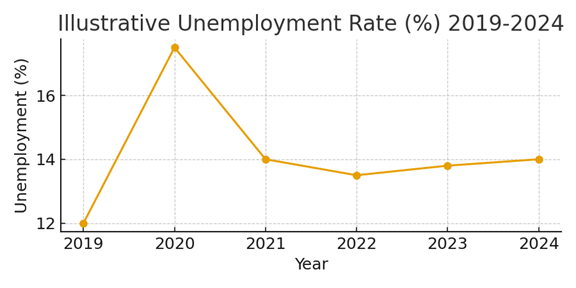
In recent years, the unemployment rate has dropped from double digits to around 10-12%, indicating steady progress. However, rural areas still face limited employment opportunities compared to urban centers like Tbilisi, Batumi, and Kutaisi.
To sustain growth, Georgia continues to focus on education, vocational training, and foreign investment to stimulate job creation and enhance workforce competitiveness.
The following chart illustrates unemployment trends (illustrative):
Addressing unemployment involves investments in training, incentives for firms to hire youth and women, and programs that ease transitions from informal to formal jobs.
Conclusion
The economy of Georgia has transformed dramatically over the past two decades, emerging as a resilient, diverse, and forward-looking system. With its liberal economic policies, strategic location, and investor-friendly environment, Georgia continues to attract global attention. Despite challenges such as unemployment and inflation fluctuations, the country maintains a stable macroeconomic environment and strong growth prospects. Tourism, real estate, agriculture, and digital innovation are among the main drivers shaping Georgia’s future economy. As Georgia strengthens its international partnerships and invests in infrastructure, education, and technology, it positions itself as one of the most dynamic economies in the region. For investors, entrepreneurs, and residents alike, the future of the economy of Georgia looks bright and full of opportunity.